Sample project. Patch & Pin is fictional and shows how a finished CULTESC story can look.
Patch & Pin
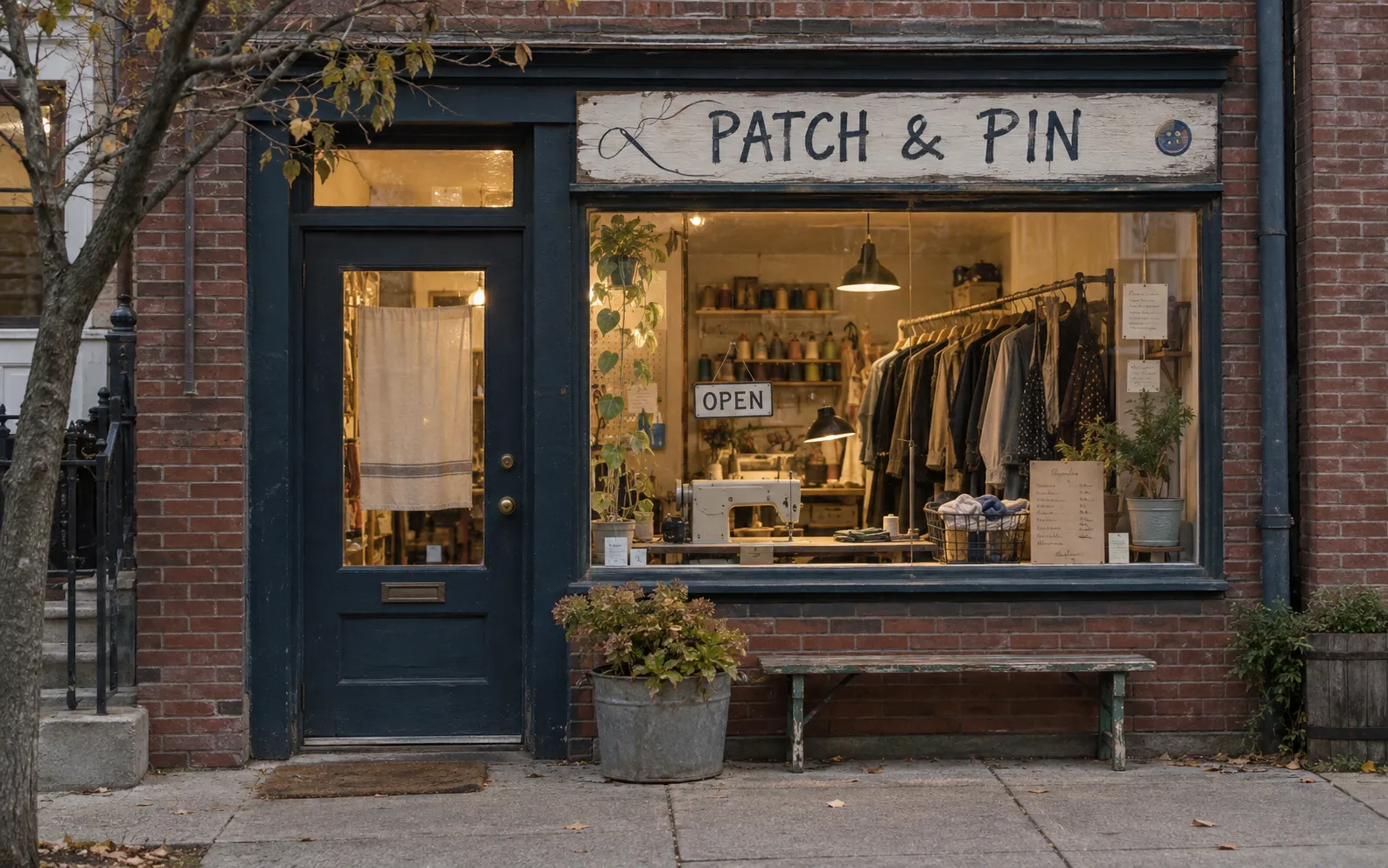
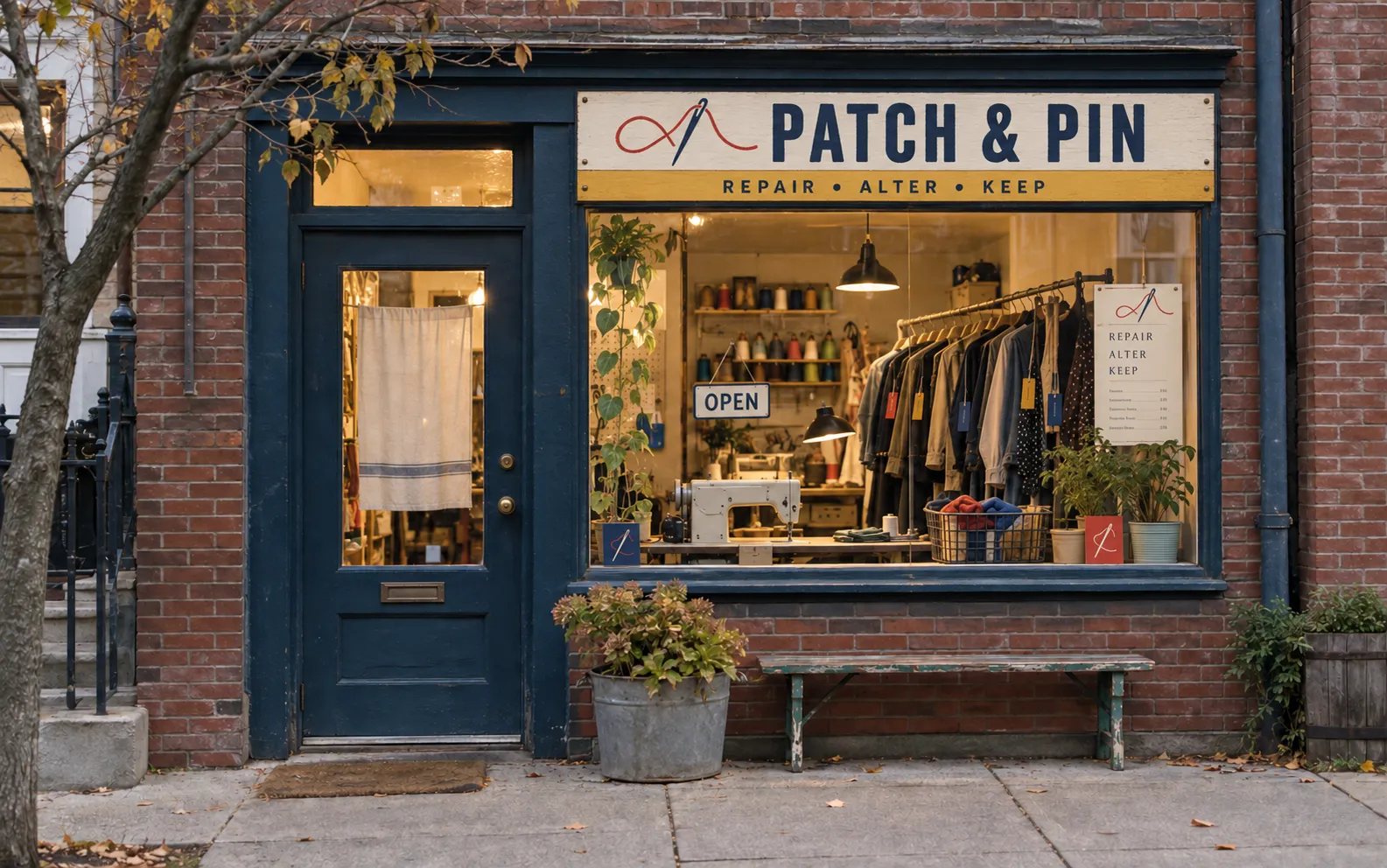
Before and after
The problem
Patch & Pin had the good part figured out: careful repairs, fair prices, and a rack of clothes people were not ready to give up. The shop looked busy because it was busy. New customers, though, had to piece everything together from a handwritten sign, a few window notes, and an Instagram inbox. The brief was simple: make the shop easier to understand without sanding off the handmade character that made it worth visiting.
The build
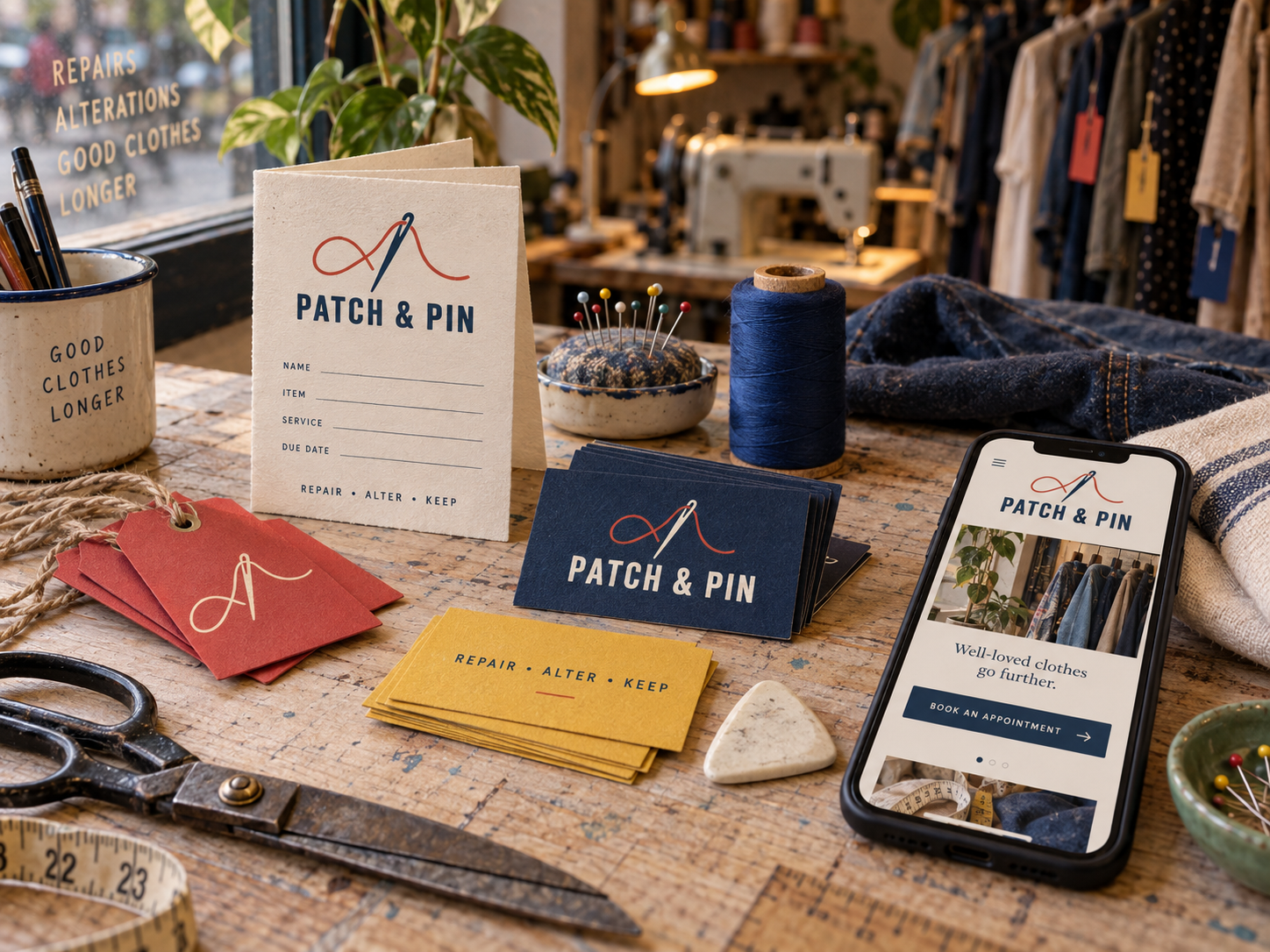
We built the identity around one continuous line: part loose thread, part needle, and part reminder that most clothes still have plenty of life in them. Deep navy keeps the system practical; tomato, mustard, cobalt, and mint turn repair tags into useful little signals. The same pieces carry across the storefront sign, garment tags, repair tickets, social posts, and a compact booking site. Customers can see common services, request an appointment, and know what to bring before they walk over.
The reveal
The finished shop still feels like Patch & Pin. It is simply easier to spot, easier to trust, and easier to use. The new line in the window says the whole thing in four words: good clothes, longer. Nothing became precious. Tickets can be stamped, tags can get wrinkled, and the website works on an old phone. The identity earns its keep the same way the shop does.
What we made
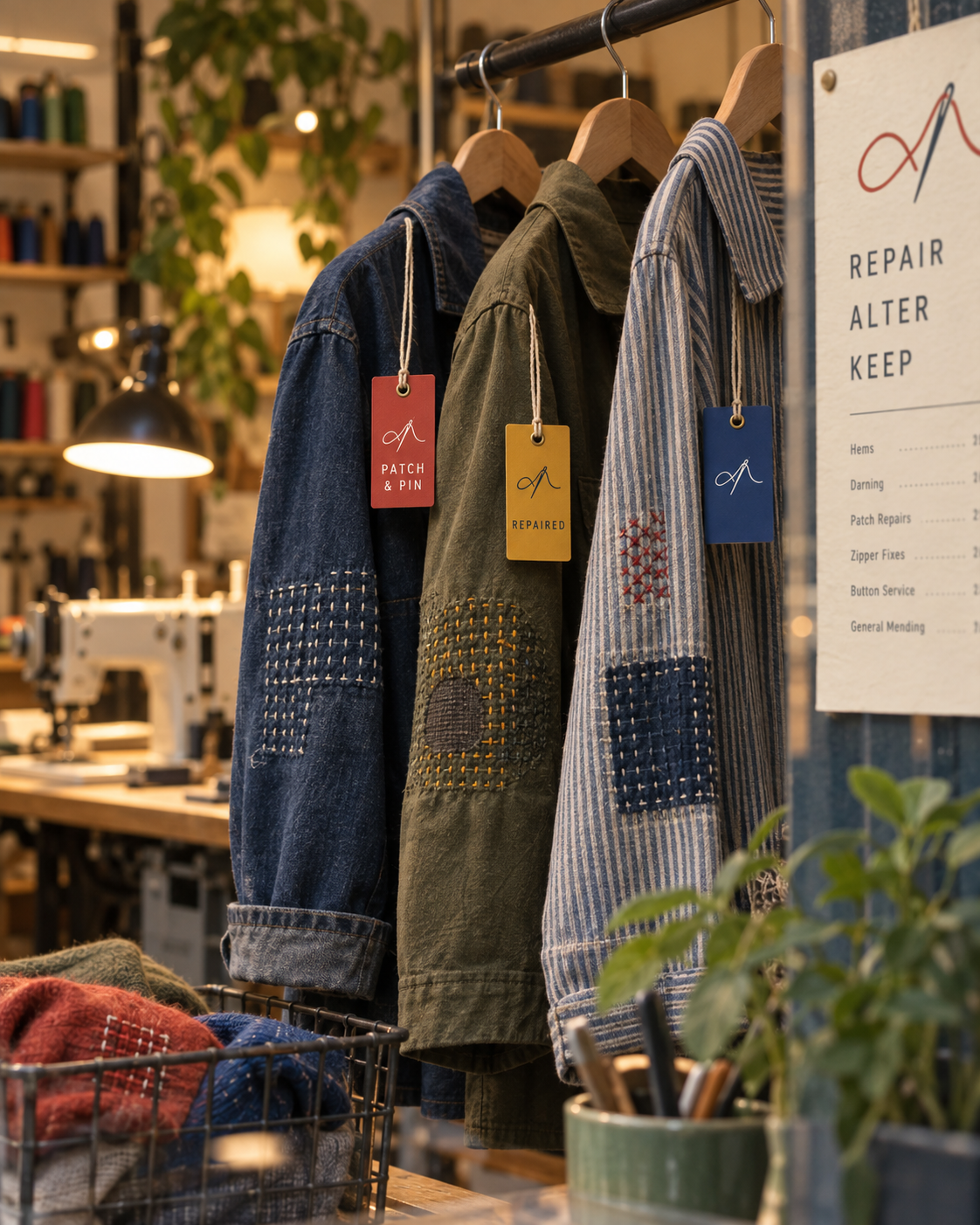
Concept and imagery by CULTESC demo team. Fictional sample project.